
When a new slitting line is commissioned, most of the attention goes to the machine: the decoiler, the slitter head, the recoiler and the controls. Yet the parts that actually touch and separate the metal are the knives, spacers and stripper rings mounted on the arbors. If the tooling package is undersized, poorly matched to the material or missing key items, even a well-built line will struggle to produce clean edges and accurate widths.
This article explains what goes into a slitting line tooling package and what buyers should specify when ordering a new Metal Slitting Line or replacing tooling on an existing one. It is about specification and purchasing. Care, regrinding and inspection routines are covered separately in our slitting line maintenance checklist.
What a Slitter Tooling Package Includes
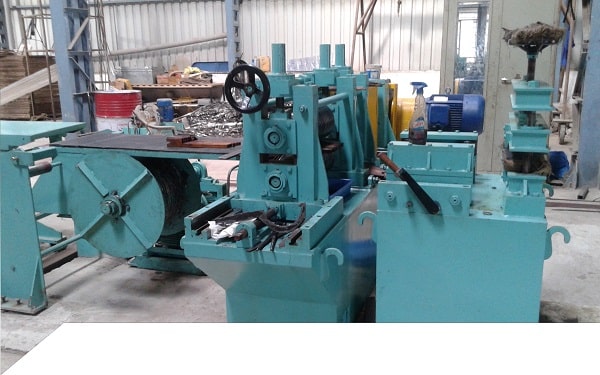
On a rotary slitter, upper and lower arbors carry a set of circular knives positioned by spacers. The knives overlap slightly and shear the strip as it passes between them. A complete tooling package typically includes:
- Slitter knives: Upper and lower circular knives that make each cut
- Spacers: Precision-ground rings that set the distance between knives and therefore the strip width
- Stripper rings: Rubber or rubber-bonded rings, usually mounted beside the knives, that guide and support the strip and help push it off the knives after the cut
- Shims or fine spacers: Thin rings for fine width and clearance adjustment, where the tooling system uses them
- Locking nuts and arbor accessories: To clamp the tooling stack on the arbor
- Separator discs: Used after the slitter head to keep slit strips apart before recoiling
- Storage and handling equipment: Racks, carts or cabinets that protect the tooling between setups
Why Tooling Decides Edge Quality and Width
A technical article in The Fabricator on avoiding coil slitting problems makes two points that matter for purchasing. First, horizontal knife clearance is one of the most important adjustable variables for edge quality, and the right clearance differs by material and thickness. Second, tooling that is not manufactured to the correct tolerances for the application behaves the same way as damaged tooling. In other words, a tooling package is not simply a set of rings. Its precision and suitability for your material set the limits of what the slitter can achieve.
Poor tooling choices show up as burr, edge cracking, camber and width variation. We looked at the defect side of this in Camber and Burr Defects in Slit Coils.
Specifying Slitter Knives
Material and hardness
Knife material and hardness should suit the materials you will slit. Harder or more abrasive materials, such as high-strength steel, stainless steel or silicon steel, place different demands on the knife than soft aluminium. Ask the line manufacturer or tooling supplier to recommend a knife grade for your full material range, and to state the hardness and any surface treatment.
Dimensions
- Bore: Must match the arbor diameter and fit
- Outside diameter: Affects overlap range and how many regrinds the knife can take
- Thickness: Influences rigidity and the minimum slit width achievable
Tolerances
Ask for the flatness, parallelism and thickness tolerances of the knives. These feed directly into the accuracy of every cut.
Quantity
The number of knives needed depends on the maximum number of strips you will slit, plus spares. A common practice is to hold a second set so one set can be reground while the other is in use. Include this in the purchase rather than discovering the need after commissioning.
Specifying Spacers
Spacers set strip width, so their accuracy matters as much as the knives. When specifying them, consider:
- Range of widths: A set that allows you to build every slit width you expect to produce
- Grinding tolerance: Thickness, flatness and parallelism tolerances for each spacer
- Material and finish: Durability against wear and damage during handling
- Weight: Lighter spacers can make setup easier on wide arbors
- Identification: Clear marking of each spacer’s size to reduce setup errors
The Fabricator article cited above notes that nicked or dented spacers do not seat properly and produce inaccurate clearances. It also notes that a properly designed shimless tooling system should not need shims at all. Ask your supplier how width adjustments are made with the system offered.
Specifying Stripper Rings
Stripper rings sit alongside the knives and help guide the strip, support it during the cut and strip it away from the knife afterwards. Tooling manufacturers such as TKM describe rubber-bonded stripper rings offered in a range of hardnesses and thicknesses, with female and male sets in different outer diameters. The right choice depends on material thickness, surface sensitivity and how much stripping force is needed.
Points to specify include:
- Rubber hardness and compound suited to your material and any oils or cleaning fluids used
- Outer diameter relative to the knife diameter
- Thickness range to match your spacer set
- Whether rubber-bonded rings or loose rubber rings on steel cores will be used
Matching the Package to Your Product Mix
A tooling package should be built around your real production, not just the line’s maximum capacity. Give the supplier:
- Materials, grades and thickness range
- Narrowest and widest slit widths
- Typical slitting patterns and the number of strips per pattern
- Edge quality and burr requirements
- How often patterns change per shift
If you slit both thin and thick material, one tooling set may not suit both well. Some processors keep separate knife sets for different material groups. If your line will process both light gauge and heavier material, discuss this explicitly with the manufacturer.
Setup Time and Tooling Handling
Tooling changeovers can take a significant share of a slitting line’s working time, especially for processors who run many short orders. A tooling package can reduce that time if it includes:
- Pre-setting stations or off-line tooling build areas
- Clearly marked spacers and knives
- Storage that keeps sets organised by pattern
- Handling aids for heavy tooling
These items rarely appear on a headline quotation, so ask about them directly.
Tooling Questions to Ask Your Supplier
- What knife material and hardness do you recommend for each of our materials?
- What are the tolerances on knives and spacers?
- How many knives, spacers and stripper rings are included, and is a second set offered?
- How are fine width adjustments made with this system?
- What stripper ring hardness and diameter suit our material and thickness range?
- How many regrinds can each knife take before replacement?
- Is tooling storage or a pre-setting station included?
Conclusion
The tooling package sets the limits of every slitting line’s edge quality and width accuracy. Specifying knives, spacers and stripper rings around your actual materials and slit patterns, with clear tolerances and enough sets for regrinding and changeovers, gives the line a much better chance of performing as intended from the first coil.
Valgo designs slitting lines as part of its wider Coil Processing Solutions range. To discuss your material range, slit patterns and tooling requirements, contact Valgo Group.
