
A finished coil can be packed in two basic orientations: lying flat with its eye pointing up, or standing on its edge with its eye pointing sideways. The choice looks like a packing detail, but it shapes how the coil is handled at the end of the processing line, how it is stored, how it is secured on a truck or in a container, and how the customer unloads it. Get it wrong, and the result can be damaged edges, unstable loads or a coil that the customer’s equipment cannot pick up.
This article compares eye to sky coil packing with eye-to-wall (horizontal) packing from a dispatch planning point of view. It covers when each orientation is used, the handling and securing considerations for each, and how orientation affects packing line design. It is general guidance. Load securing must follow the applicable transport regulations, carrier requirements and the customer’s specifications.
The Two Orientations
Eye to sky
The coil lies flat on one face, with the eye, or bore, pointing vertically upward. This orientation is also called eye vertical or bore vertical. It is common for narrow slit coils, which are unstable on their edge.
Eye to wall
The coil stands on its outer edge, with the eye pointing horizontally. This is also called eye horizontal, eye to side or, depending on the direction relative to the vehicle, eye to rear or eye fore-and-aft. It is common for wide coils and master coils, which are too large and heavy to lie flat easily and can be picked up through the eye by a C-hook or coil ram.
What Decides the Orientation
Coil width relative to diameter
Coil geometry is usually the first factor. A narrow coil standing on edge is tall relative to its width and can tip or roll. An Ontario government safety alert on the storage and handling of steel coils notes that narrow coils are most stable lying flat with the eye to the sky and are unstable when standing on edge unless properly supported, for example in a rack or banded together into a stable unit. Wide coils, by contrast, are generally handled eye horizontal, chocked on a level surface to prevent rolling.
The customer’s handling equipment
The receiving plant’s equipment often decides the orientation. A customer who loads coils onto a decoiler with a C-hook or coil ram through the eye needs coils that can be picked up that way. A customer who handles coils on pallets with a forklift may prefer eye-to-sky packing. This should be agreed before the order is processed.
Transport mode
Road, rail, container and breakbulk transport each have their own securing practices. Container shipments, for example, are subject to guidance on bedding, blocking and lashing for each orientation.
Material and surface sensitivity
Cold-rolled, coated and aluminium coils can be marked by contact points. Orientation affects where the coil’s weight bears and where protection is needed.
Eye-to-Sky Packing: Handling and Securing
- Pallets: Coils are usually placed on pallets or skids that allow forklift handling. The pallet needs to suit the coil weight and diameter.
- Stacking: Several narrow coils may be stacked on one pallet. The Ontario alert advises that wider coils should not be placed on top of narrower ones.
- Edge protection: The bottom face and edges bear the weight, so protectors and interleaving help prevent edge damage.
- Strapping: Coils are strapped to the pallet and, where stacked, to each other to form a stable unit.
- Securing: Guidance from the cargo insurer TT Club on packing and securing coiled materials notes that eye-to-sky coils may be secured to pallets that incorporate bedding beams, and that coils should not rest directly on the container floor.
Eye-to-Wall Packing: Handling and Securing
- Cradles and saddles: Coils are typically placed in cradles or on saddles or bedding beams to stop them rolling.
- Bore protection: Lifting through the eye can damage inner wraps, so inner protectors or bore guards are often used.
- Outer protection: The outer wraps take the coil’s weight at the contact points, so outer protection and edge protectors matter.
- Chocking: Coils must be chocked in storage and blocked during transport.
- Securing: The TT Club guidance notes that coils oriented eye to rear in a container have an increased risk of moving sideways during sea transport and require additional lashing, and that blocking and bracing are needed in all cases because lashing alone is not considered sufficient.
Common Risks in Both Orientations
- Telescoping: If edges are not aligned when the coil is wound, the coil can telescope during handling. The TT Club guidance notes this risk especially at the centre core turns. Good winding tension and strapping reduce it.
- Moisture: Wet dunnage and damp timber can cause corrosion. The same guidance recommends properly dried timber and warns against materials that may be sources of moisture.
- Surface damage: Cold-rolled, treated and aluminium surfaces need protection from scratching and from conditions that cause corrosion.
- Handling damage: Edge and bore damage often happen during lifting, so lifting equipment should suit the orientation.
Our earlier guide on how to do steel coil packing covers the protectors and packing steps in more detail.
How Orientation Affects Packing Line Design
Orientation needs to be decided before a packing line is specified, because it changes the equipment. Considerations include:
- Coil tilting or upending: A slitting line usually produces coils eye horizontal on the recoiler. Producing eye-to-sky packs means the line needs a way to tilt coils to the flat position safely.
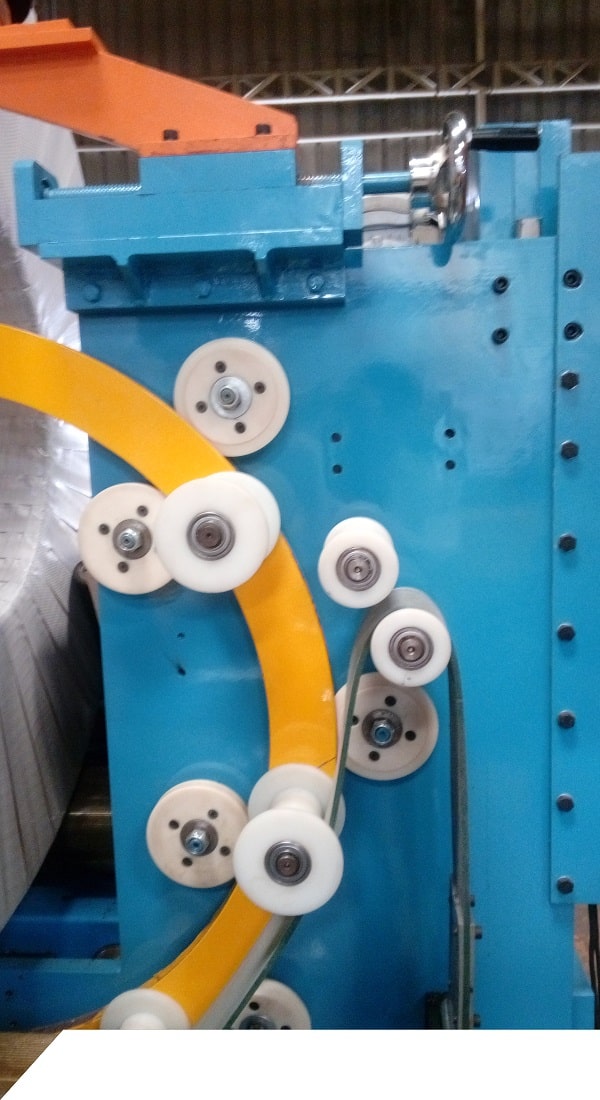
- Wrapping method: Eye-through wrapping, in which the wrapping material passes through the bore and around the coil, is common for coil packaging. Valgo’s coil wrapping machine is a ring-type stretch wrapper designed for eye-through packing.
- Stacking and palletising: Eye-to-sky packs may need stacking of several coils on one pallet, which adds handling steps.
- Weighing and labelling: Labels must be visible and readable in the final orientation.
- Integration with the slitting line: Valgo’s coil packing lines are designed to integrate with slitting lines, in manual or automated configurations.
Questions to Settle Before Dispatch Planning
- What coil widths, diameters and weights will be dispatched?
- How does each customer lift and load coils?
- Which transport modes will be used, and what securing requirements apply?
- Which surfaces and edges need protection?
- Will coils be stored before dispatch, and for how long?
- Does the packing line need to produce both orientations?
Conclusion
Eye-to-sky and eye-to-wall packing each suit different coil sizes, handling methods and transport routes. Narrow slit coils are usually most stable flat, while wide coils are usually handled on edge. Choosing the orientation early, agreeing it with customers and designing the packing line around it reduces handling damage and makes loads easier to secure.
Explore Valgo’s Coil Processing Solutions, and share your coil dimensions and packaging expectations with Valgo Group.
