Standard machines exist for good reasons. A proven configuration has known performance, a documented design and usually a shorter delivery time. For many coil-to-sheet and coil-to-strip operations, a standard line is exactly the right choice. But some projects do not fit neatly into a catalogue model. The material range is unusual, the building is too short, the downstream process needs something added in-line, or the plant wants several operations combined. That is when a custom sheet metal processing line deserves a serious look.
This article helps plant owners and engineers decide when customisation is appropriate, what it involves, and how to prepare a brief that lets an equipment manufacturer assess feasibility. It is about the customisation decision itself. Every customised design still needs a proper engineering review before anyone can confirm what is achievable.
Standard, Configured and Customised: Understanding the Difference
It helps to think of three levels rather than two:
- Standard line: A catalogue model built to a fixed specification for material range, width, coil weight and output.
- Configured line: A standard model with selected options, such as a different shear type, additional automation or a specific stacker arrangement.
- Customised line: A line in which one or more units, the overall arrangement or the process itself is engineered specifically for the project.
Many requirements that first appear to need customisation can be met with a configured standard line. Checking that first usually saves time and cost.
Signs a Standard Line May Not Fit
Your material range is unusually wide
A plant that wants to process both thin cold-rolled sheet and thicker hot-rolled material on one line, or several very different materials, may find that no standard model covers the full range well. A line sized for thick material can struggle with thin gauges, and the reverse.
Your output is non-standard
Very long or very short sheet lengths, unusual widths, special stacking requirements or blanks rather than rectangular sheets can all push beyond a standard specification.
You need additional processes in-line
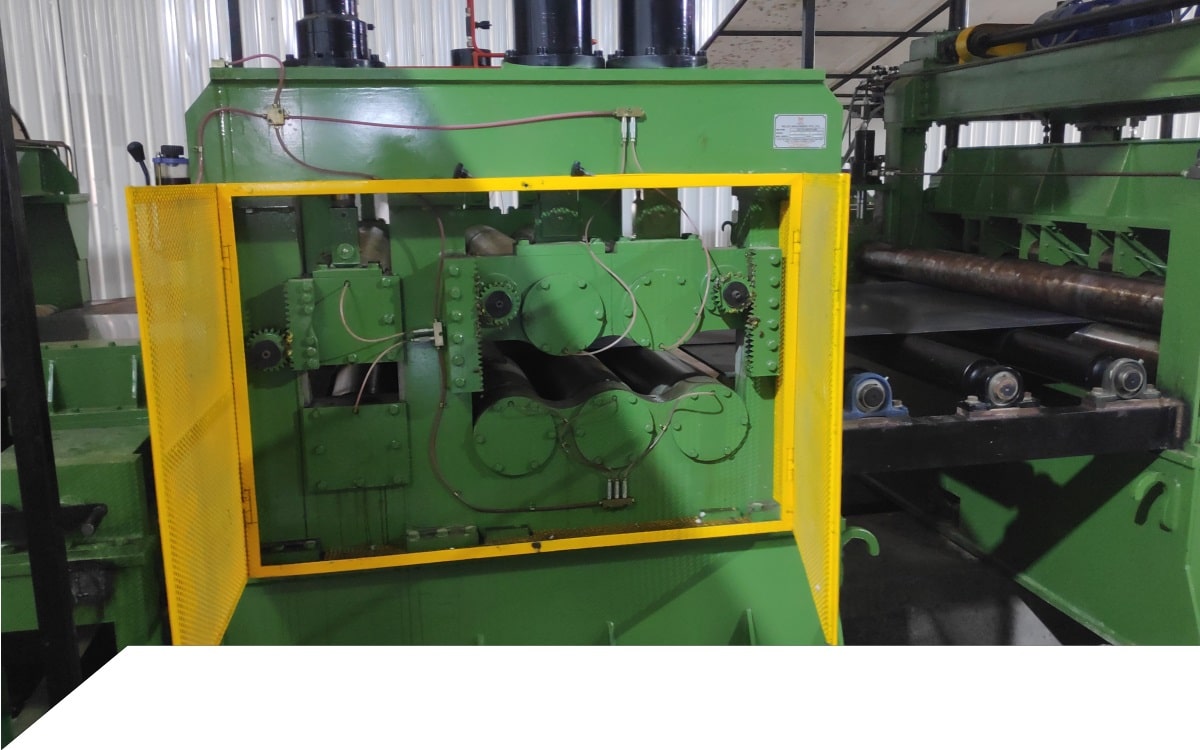
Some plants want to combine operations to remove handling steps. Valgo’s published cut to length line options include adding a punching unit, edge trimming, a paper winder at the decoiler or a plastic lamination unit in the line, as well as belt and sheet conveyors with alternate stacking trolleys. Integrations like these change the line’s layout, controls and timing, so they need to be engineered as a system.
Your site imposes constraints
A building that is shorter or narrower than a standard line requires, low crane hook height, existing foundations or columns in awkward positions can all force a different arrangement.
You are integrating with existing equipment
Adding a new unit to an existing line, or linking a slitting line to an existing packing system, means matching heights, speeds, controls and interfaces that a standard product may not anticipate.
You have specific quality requirements
Demanding flatness, surface protection or dimensional requirements may call for a specific leveller, additional straightening, special roll surfaces or extra inspection points. Valgo’s HR cut to length line page, for instance, notes that the line can be customised with a stretching unit for flattened sheet where required.
What Customisation Costs, Beyond the Price
Customisation is not only about price. It also tends to bring:
- Longer engineering time: Design, review and approval stages add weeks before manufacture begins.
- More decisions for the buyer: The customer must review and approve drawings and interfaces.
- Different risk: A new combination has less operating history than a proven standard model, so trials and acceptance criteria matter more.
- Spares and documentation: Custom components need their own drawings and spare parts planning.
These are reasons to define requirements carefully, not reasons to avoid customisation when it is the right answer.
Defining Requirements Before Talking to Suppliers
A customisation project succeeds or fails on the quality of the initial brief. Before approaching suppliers, gather:
- Materials: Every grade, with thickness, width and strength range
- Coils: Maximum weight, inner and outer diameters
- Finished product: Dimensions, tolerances, flatness, edge and surface requirements
- Output: Target production volume, shift pattern and product mix
- Additional processes: Any punching, trimming, filming, marking or packing to be included
- Downstream use: What the customer will do with the product next
- Future needs: Products or materials you expect to add in the coming years
Separate the “must-haves” from the “nice-to-haves”. This lets the manufacturer propose options and gives you a basis for trade-off decisions.
Site Constraints to Document
- Building length, width and column positions
- Crane capacity, span and hook height
- Floor and foundation conditions, including existing pits
- Available power, compressed air and other utilities
- Material entry and dispatch routes
- Existing equipment to be connected, with its specifications
Drawings and photographs of the site are extremely useful. They often reveal constraints that are easy to miss in a written brief.
Why Engineering Review Comes First
Feasibility is not something a sales discussion can confirm. A customised line needs an engineering review of forces, speeds, controls, layout and safety. Safety, in particular, has to be addressed as part of the design. The international standard ISO 12100 on risk assessment and risk reduction for machinery describes the general approach of identifying hazards and reducing risk through design, safeguarding and information. New combinations of units create new interfaces, and each needs to be assessed.
A good review should end with:
- A clear statement of what the proposed design will and will not do
- A general arrangement drawing for approval
- Defined interfaces with existing equipment and the building
- Agreed acceptance criteria and a trial plan
A Simple Project Brief Template
- Company and site details
- Purpose of the line and the problem it should solve
- Material and coil data
- Finished product specifications and tolerances
- Production targets
- Required in-line processes
- Site layout, crane and utility details
- Existing equipment to be integrated
- Must-have and preferred features
- Target timeline and budget range
Conclusion
A customised processing line makes sense when your material range, output, site or integration needs genuinely fall outside what a standard or configured model can deliver. The decision should be driven by clear requirements and confirmed through engineering review, not by assumption. With a well-prepared brief, both buyer and manufacturer can judge early whether customisation is worth it.
Valgo designs standard and customised Cut to Length Line configurations and other sheet metal processing lines. Learn more About Valgo Group, or share your application brief with our team.
