When a coil processing line is delayed or fails to perform as expected, the root cause is often not a single faulty component. It is a gap between what the customer needed, what the designer understood, and what the machine shop built. A dimension changed on one drawing but not another. An interface between two units was assumed rather than checked. A material requirement mentioned in the first meeting never reached the people machining the parts.
Coordination between design and manufacturing is one of the less visible factors that shapes an industrial machinery manufacturing process. This article looks at why it matters to buyers, how requirements move from enquiry to finished machine, and what questions buyers can ask any manufacturer about how their engineering and production teams work together. It draws on Valgo’s own published company information to illustrate the approach.
Why Coordination Matters to the Buyer
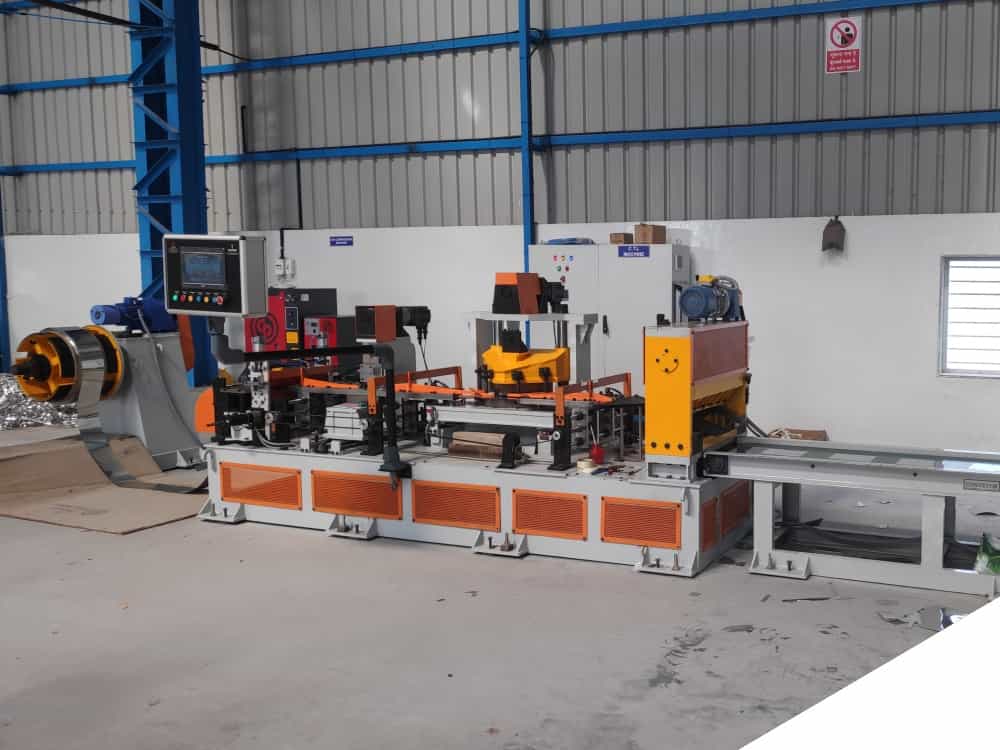
A slitting line, cut-to-length line or transformer core cutting line is a system of many units working together: decoilers, levellers, feeders, slitter heads or shears, tension units, recoilers, stackers, hydraulics and controls. Each unit has to be designed for the same material range, speed and loads, and each has to connect correctly to the next.
When design and manufacturing are closely linked, problems are more likely to be caught early, while they are still a drawing change rather than a rework job. When they are separated, by distance, by organisation or by poor communication, errors tend to travel further before anyone notices. For the buyer, that difference can show up in delivery time, commissioning duration and how well the line performs in the first months of production.
Translating Customer Requirements into a Design
Every project starts with an enquiry, and the quality of that enquiry shapes everything that follows. Material grades, thickness and width range, coil weights, finished product requirements, output targets and site constraints all have to be understood before design starts.
Good practice at this stage includes:
- Confirming requirements in writing and resolving ambiguities before design begins
- Identifying which requirements are firm and which are flexible
- Flagging any requirement that falls outside a standard configuration
- Agreeing a general arrangement drawing with the customer
Safety also needs to be considered at the design stage, not added later. The international standard ISO 12100 sets out general principles for risk assessment and risk reduction in machinery design, starting with eliminating hazards through design wherever possible.
The Role of 3D Design
Three-dimensional design software has changed how machinery is engineered. A 3D model lets designers check how units fit together, confirm clearances, look for interferences between moving parts and review maintenance access before any metal is cut. It also makes it easier to share the design with customers in a form they can understand.
Valgo’s company profile describes this as part of its process: products are designed in the company’s own design office by a design and development team using 3D design software. Keeping that work in-house means design decisions can be discussed directly with the people who will build the machine.
From Drawing to Machine Shop
Once a design is approved, it has to be turned into accurate parts. For coil processing equipment, precision matters in components such as arbors, rolls, knife seats, shafts and housings, where alignment and fit directly affect product quality.
Valgo’s published information states that the company carries out its engineering processes in its own machine shop, equipped with CNC machinery and operated by skilled machine operators and technical staff. When machining is done in-house, the design team and machine shop can resolve questions about tolerances, materials or manufacturing methods quickly, without waiting on an external supplier.
Coordination at this stage typically covers:
- Checking drawings for manufacturability before release
- Planning the machining sequence for critical components
- Inspecting key dimensions on precision parts
- Feeding manufacturing issues back to design so drawings are corrected
Assembly, Testing and Feedback
Assembly is where design and manufacturing meet in physical form. Units are assembled, aligned and, where possible, run together before dispatch. Issues found here, such as an alignment that is difficult to achieve or a component that is hard to reach for maintenance, are valuable feedback for future designs.
For buyers, this is also the stage at which a factory acceptance test can be arranged. Our slitting line buyer’s guide includes a FAT checklist that can be used to verify a machine before it leaves the manufacturer’s works.
Communication with the Customer
The best internal coordination still depends on good communication with the customer. A buyer should expect:
- A single technical point of contact for the project
- Drawing approvals at agreed stages
- Prompt notification of any change that affects specification, layout or schedule
- Clear documentation at handover, including manuals, drawings and spares lists
A Company Built Around Coil Processing
Valgo Group began in 2001 as a small engineering workshop in Ahmedabad and was registered as Valgo Machinery Private Limited in 2013, with its works in Kathwada GIDC, Ahmedabad. Its product range includes CR and HR slitting lines, CR and HR cut-to-length lines, CRGO core cutting lines with step-lap lamination, coil wrapping and packing lines, narrow strip oscillating traverse winders, tube mills and customised sheet metal processing lines. Designing and building this range in-house gives the engineering and production teams a shared understanding of how each unit fits into a complete line.
You can explore the range on our Coil Processing Solutions page.
Questions Buyers Can Ask Any Manufacturer
- Where is the design work done, and by whom?
- Which components are machined in-house, and which are bought in?
- How are design changes communicated to the machine shop?
- How are critical dimensions inspected?
- Will the line be assembled and run before dispatch?
- Who will be our technical contact throughout the project?
- What documentation will we receive at handover?
The answers give a practical picture of how a manufacturer manages the path from requirement to working machine.
Conclusion
A well-coordinated path from design office to machine shop reduces the chance that errors reach the customer’s site. For buyers, understanding how a manufacturer manages that path is as useful as reading its specification sheet.
Read more About Valgo Group and our equipment range, or contact us to discuss your project.
